
Courses built around your actual space
Self-paced, topic-organized, and grounded in the specific challenges of container growing in US climates.
Container gardening has a learning curve that's different from any other kind of growing. The variables are compressed into a small volume of soil, which means small decisions have big effects. The courses are organized to help you understand those variables one at a time, then see how they interact.
Space Assessment
Before anything else, you map what you're working with. This isn't complicated, but it matters enormously. How many hours of direct sun does your space receive, and when during the day? What's the weight limit of your balcony or deck? Is there wind exposure that will dry out containers faster than expected? Is there a water source nearby, or will you be carrying a watering can from inside?
The assessment module walks you through a simple observation process that takes a few days but gives you information you'll use for every growing decision after. You come out of it with a clear picture of your constraints and opportunities, not just a vague sense that you "have some sun."
 Tracking the sun
Soil and Drainage
This is where most container gardens succeed or fail, and where the course content goes deepest. Standard potting mix from a garden center is a reasonable starting point, but understanding what's in it and why helps you make it work better or modify it for specific crops.
You learn the role of perlite in aeration, how to evaluate drainage hole sizing, why "well-draining" means something different in a pot versus the ground, and how watering frequency needs to shift with the seasons. There's also a section on self-watering containers and wicking systems, which change the calculus significantly if you travel or have an inconsistent schedule.
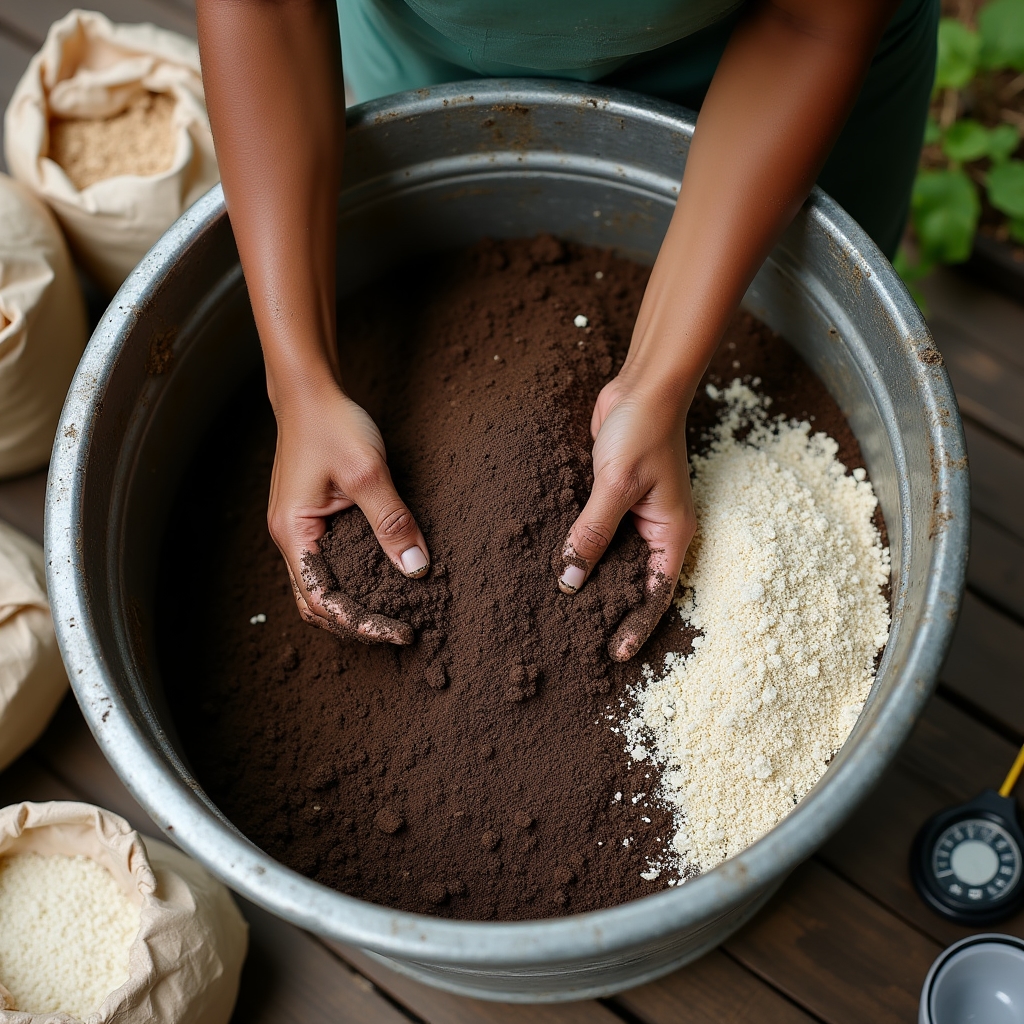 Building the right mix
Variety Selection
This is where a lot of people make their first big mistake. They buy whatever looks good at the garden center without considering whether it's suited for container life. Indeterminate tomatoes in a 5-gallon bucket. Zucchini in a window box. Melons anywhere.
The variety selection content gives you a framework for evaluating any plant for container suitability, plus specific recommendations for vegetables and herbs that reliably perform well in pots. Compact determinate tomatoes. Bush beans. Dwarf pepper varieties. Cut-and-come-again greens. Herbs that actually prefer the slightly drier conditions of container growing. You also learn how to read seed catalog descriptions to spot container-friendly characteristics even when they're not explicitly labeled.
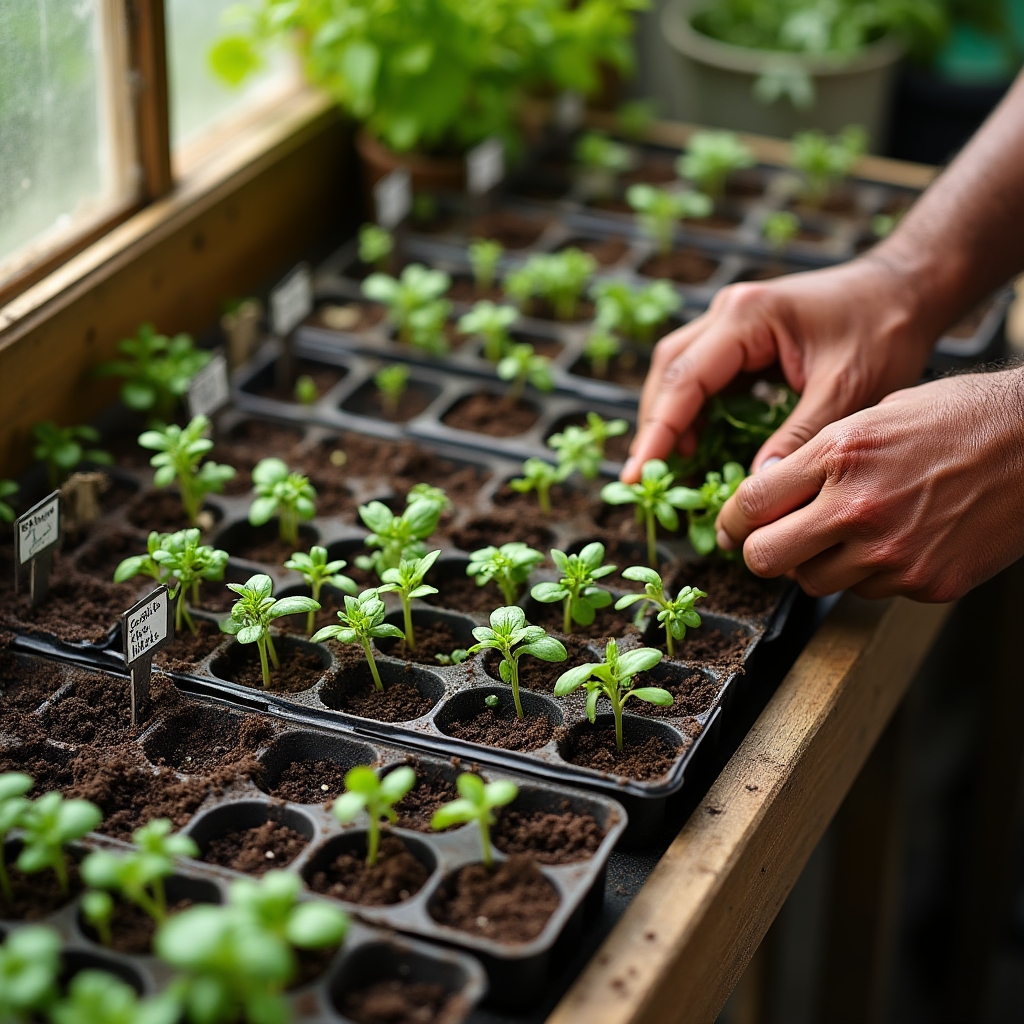 Choosing the right varieties
Seasonal Planning
Container gardening is a year-round activity in most US climates, even if the crops change dramatically. The seasonal planning content helps you think about your growing calendar as a whole rather than just "what do I plant in spring."
You map out succession planting so you're not harvesting everything at once and then having nothing for two months. You learn which crops bridge seasons, what to do with containers between plantings, and how to extend your season with simple cold protection. The content is organized by US climate region so the timing is actually relevant to your location, not just some generic "zone 6" assumption.
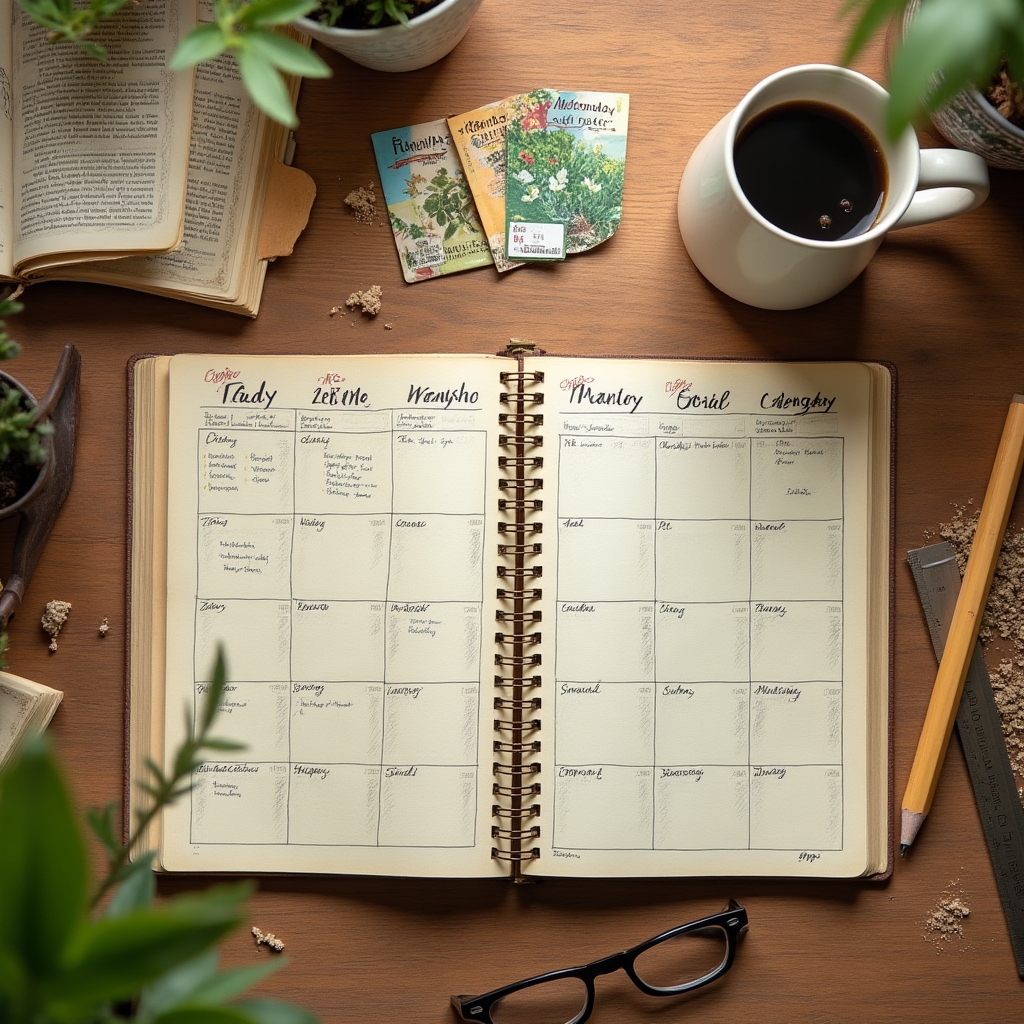 Planning the seasons